
Movement sensing
Movement-triggered updates
V-Tag asset tags can use accelerometer-based movement sensing. Movement-triggered behavior should be configured and validated against the asset, expected use, battery plan, and reporting requirements.
Active RFID product infrastructure
Track movable assets with V-Tag asset tags, fixed-location tags, gateways, movement sensing, and Rocket Tracked software events.
Product role
V-Tag is Rocket RFID's active RFID product and infrastructure for movable assets that need more location visibility than a passive handheld scan or doorway read can provide. See the broader active RFID systems guide for the architecture, operational tradeoffs, and deployment questions behind that decision.
The system combines active asset tags, fixed location references, gateways, and Rocket Tracked software events. Deployment design determines the practical location model, coverage, event frequency, and support process.
How V-Tag works
V-Tag is designed as a practical active RFID location-event system: install reference points, tag the movable asset, connect gateways, and let Rocket Tracked record the events. For the right asset class, the operating idea is close to "stick it and forget it," while still planning battery lifecycle, coverage, and exception review responsibly.
Components

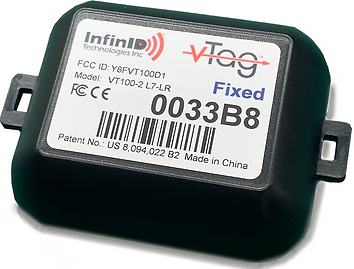
Battery-powered tag for movable assets, with movement sensing and beeper assistance available where the project configuration supports them.
View V-Tag Asset TagReference tag used to identify areas or zones in the active RFID infrastructure.
View Fixed Location Tag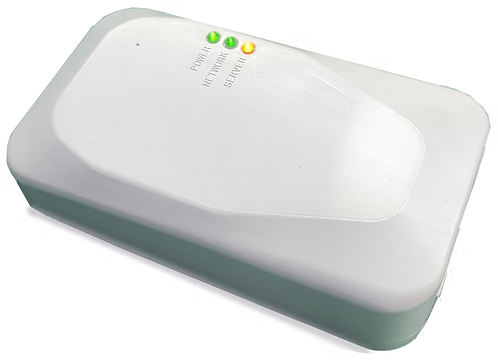
Gateway infrastructure that receives V-Tag messages and helps deliver location events to the software layer.
View V-Tag GatewayLocation model
V-Tag should be planned as an active RFID location-event system, not as GPS-style coordinates. Active asset tags report through the V-Tag infrastructure, fixed references help identify areas, and software derives the current or last location event from that architecture.
Room, zone, or area expectations should be validated in the actual building. Materials, density, gateway coverage, placement, network conditions, and event filtering all affect the result.
Movement sensing
V-Tag asset tags can use accelerometer-based movement sensing. Movement-triggered behavior should be configured and validated against the asset, expected use, battery plan, and reporting requirements.
Find assistance
V-Tag asset tags can support an audible beeper activated through Rocket Tracked where the tag and deployment support that function. Treat the beeper as a locating aid, not a substitute for good coverage design, asset process, or on-site validation.
Software relationship
V-Tag provides active RFID location and movement events. Rocket Tracked is the software layer that can associate those events with asset records, location history, alerts, utilization review, and workflow rules. For the broader software portfolio, see RFID software.
The product decision should define which events matter: moved, last seen, entered area, left area, located by beeper, due for review, or exception.
Technology choice
V-Tag and passive RFID serve different jobs. Active RFID is often a better fit when movable assets need broader location visibility. Passive RFID is usually a better fit when the workflow can rely on lower-cost tags, handheld scans, fixed read points, or portal events. The active versus passive RFID guide provides a more detailed selection framework.
| Consideration | V-Tag Active RFID | Passive RFID |
|---|---|---|
| Power | Battery-powered tags and gateway infrastructure. | Battery-free tags read by handheld or fixed UHF readers. |
| Typical location model | Area, zone, room, or last active location event depending on deployment design. | Last-seen read point, scan area, portal transition, or handheld scan event. |
| Best fit | Movable assets that need broader location visibility or movement-triggered updates. | Inventory, checkout, doorway reads, fixed portals, and lower-cost item tagging. |
| Operating concerns | Battery lifecycle, gateway coverage, network access, tag placement, and event filtering. | Tag orientation, metal/liquid effects, reader placement, and user scan workflow. |
Fit check
V-Tag is worth evaluating when the asset is valuable enough to justify active tags and gateway infrastructure, the operation needs broader area or zone visibility, and the team has a process for battery lifecycle, network support, and exception response. Review active RFID tag types and selection criteria when defining the physical tag requirements.
Passive RFID, barcode, BLE, UWB, Wi-Fi, GPS, or process changes may be better for other workflows. The technology should follow the location expectation and operational value.
V-Tag active RFID
Talk through the assets, location expectations, gateway coverage, movement events, beeper use, Rocket Tracked records, and support model.