Passive UHF RFID tag sourcing

Passive RFID Tags

Select and source passive RFID tags around the asset, material, attachment method, read environment, software record, and workflow the project needs to support.

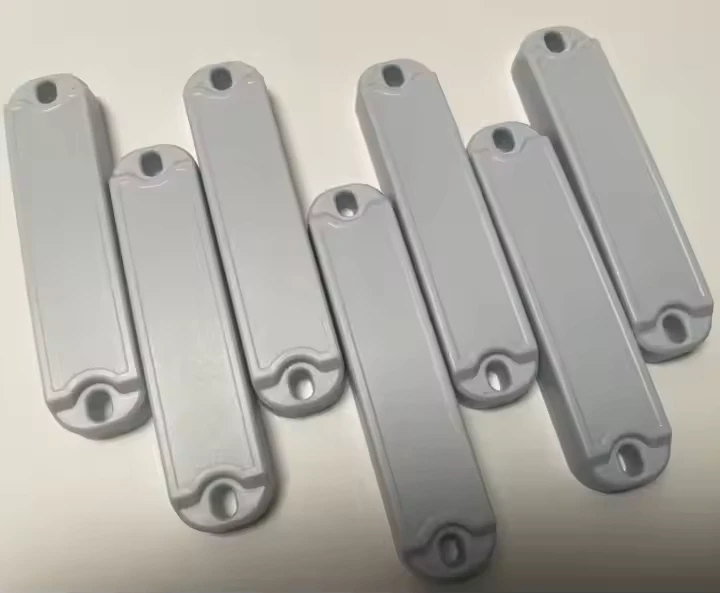
Representative passive UHF on-metal RFID tag

Tag basics

What passive RFID tags are

Passive RFID tags identify physical items without an onboard battery. A compatible reader energizes the tag and receives the tag identifier, which software maps to the item, asset, document, tool, carton, pallet, or vehicle record.

Rocket RFID helps identify, source, sample, test, and deploy passive tags for projects. The right tag is confirmed against the actual asset and read environment before quotation or rollout.

Why it matters

Tag selection can make or break the RFID project

The same reader can perform well with one tag and poorly with another. Size, antenna design, surface material, attachment method, orientation, environmental exposure, and read point all influence whether a tag can be trusted in the workflow.

  • What is being tagged and how much space is available?
  • Is the surface cardboard, plastic, glass, metal, liquid-filled, curved, dirty, or irregular?
  • How will the tag attach: adhesive, screw, rivet, cable tie, embedded, sewn, or another method?
  • Where will reads happen: handheld scan, shelf, cabinet, doorway, workstation, gate, dock, or portal?
  • What read range is actually needed for the workflow?
  • Does the environment include heat, cold, chemicals, cleaning, UV, abrasion, impact, or outdoor exposure?
  • Does the tag need printed text, barcode, EPC memory, TID lookup, user memory, or lock features?
  • How many tags are needed for the pilot and eventual rollout?

Form factors

Common passive RFID tag form factors

InlaysLow-profile RFID constructions used inside labels, tickets, cards, or converted tag formats.
Printable labelsRFID labels that can carry printed text, barcode, and encoded RFID identity for item, case, document, or carton workflows.
On-metal tagsTags built with spacing or materials that let them perform on conductive surfaces that would detune normal labels.
Rugged hard tagsEncased tags for tools, equipment, bins, outdoor assets, impact exposure, or difficult handling.
High-temperature tagsSpecialty tags selected for process heat, metal, mounting, dwell time, and environmental exposure.
Small or embedded tagsCompact tags for tools, instruments, fixtures, or assets where normal labels are too large.
Cable-tie tagsTag formats that attach by tying to cables, bins, cages, containers, or assets without a reliable label surface.
Windshield tagsAdhesive UHF tag options for vehicles, gates, parking, yards, lots, and controlled read points.

Surface material

Match the tag to the surface

Cardboard, plastic, glass, metal, liquids, and irregular assets each create different RF behavior. Metal usually requires an on-metal construction, and liquids or dense materials can shorten or block reads.

Attachment

Choose the mounting method early

Adhesive labels, screws, rivets, cable ties, embedded tags, sewn tags, and custom fixtures all change cost, durability, read orientation, and user workflow. The tag must survive how the asset is actually used.

Protocol and data

Frequency, EPC, TID, and user memory

Many commercial passive tag projects use UHF EPC Gen2 / ISO 18000-6C tags, but data requirements vary. EPC is commonly used for the business identifier, TID can identify tag silicon, and user memory may matter only when the workflow truly needs it.

Qualification

Read-range qualification

Read range should be qualified on representative assets with the reader, antenna, orientation, mounting method, quantity, and environment expected in the real system.

Sourcing process

Samples, testing, and tag sourcing process

  1. Define assets, materials, environment, read points, and quantity
  2. Identify candidate tag formats and current supplier options
  3. Sample and encode representative tags
  4. Test reads on real assets and mounting locations
  5. Confirm final tag model, specification, pricing, and lead time
  6. Deploy with software records, printing, commissioning, and validation

System path

Tags only matter when the read becomes useful data

A passive tag project often leads into reader selection, antenna placement, printer or encoder workflow, software records, and integration. For asset and inventory workflows,Rocket Tracked may be the software layer that turns tag reads into usable events.

Passive RFID tag sourcing

Get Tag Options & Pricing

Share the asset, surface material, environment, attachment limits, desired read point or range, software workflow, and approximate quantity so Rocket RFID can recommend current passive RFID tag options.