
Large and mobile assets

RFID Equipment Tracking

Track large equipment, vehicles, mobile assets, yard movements, gate events, and rugged on-metal items with RFID tags, readers, handhelds, and software records.

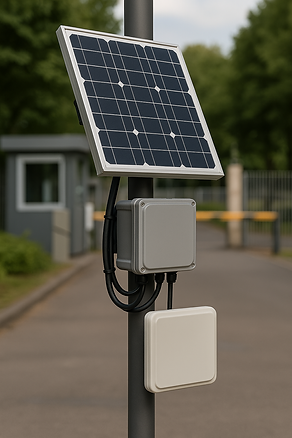
Representative outdoor RFID reader hardware for equipment tracking discussions
Outdoor readers
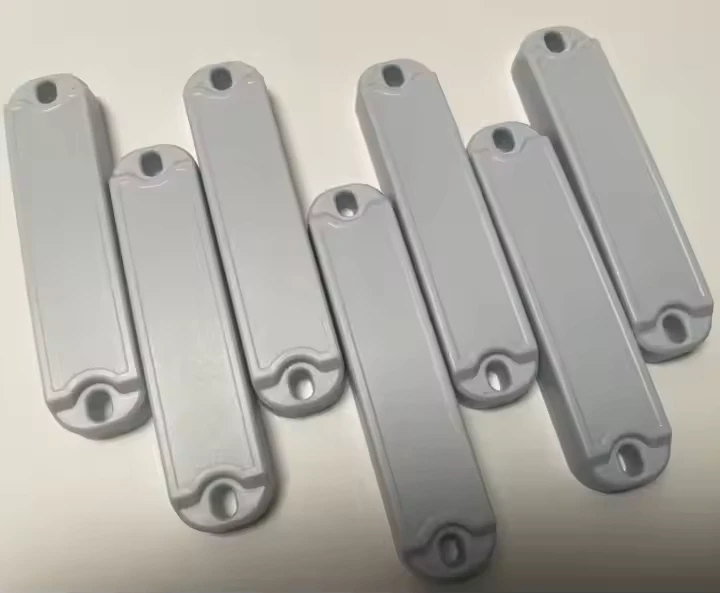
Representative rugged on-metal RFID tag for equipment
Rugged tags
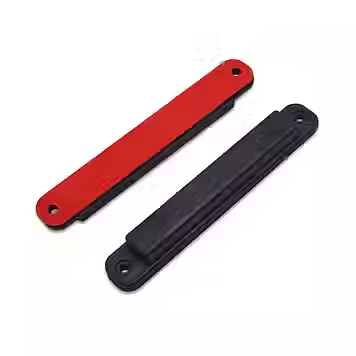
Representative vehicle RFID tag
Vehicle tags

Equipment scope

RFID for large and mobile equipment

Use RFID equipment tracking for large, mobile, and rugged equipment: vehicles, heavy equipment, construction assets, farm equipment, dealership inventory, carts, trailers in controlled yards, and high-value assets that move through gates, lots, facilities, or service areas.

Hand tools have different tagging and workflow constraints. For tool rooms, cribs, cabinets, and handheld tool search, see RFID tool tracking.

Related industry pages cover equipment and asset movement inutility operations, agriculture,waste management, construction, and transportation and logistics without replacing this broader equipment-tracking page.

Passive RFID

Passive RFID equipment tracking

Passive equipment tracking uses rugged RFID tags with fixed gate or checkpoint readers, handheld readers, or defined read points. Software records equipment identity, last event, movement history, and status.

Passive RFID works well when equipment passes controlled points or when users perform local scans. It should not be positioned as continuous outdoor map tracking.

Active RFID

Active RFID equipment location

Active RFID may be appropriate when the operation needs broader zone visibility or more frequent location updates than passive gates and handheld scans can provide.

Active infrastructure such as V-Tag can support active tags, gateways, fixed-location references, and software events. Equipment projects still need their own workflow review around surfaces, yards, gates, status changes, and service areas.

Yards and lots

Yard and lot tracking

RFID can support gate entry and exit, lot placement, staging, assigned status, transfer points, service-area movement, and local equipment search. The most useful read points are usually the places where equipment changes state.

Gates, service bays, wash areas, storage rows, and dispatch points can all be candidates, depending on where the operation needs a trusted movement event.

Dealership lots

Heavy equipment dealerships

Dealership workflows can use RFID to record arrivals, lot placement, movement to service, ready status, sold status, staging, and departure. The system should fit the way equipment actually moves through the yard and service process.

Field assets

Construction and farm equipment

RFID can work well at gates, yards, facilities, controlled transition points, and for local identification or search. If the requirement is continuous outdoor geographic tracking across open field locations, GPS may be a better primary technology.

Vehicle and rugged tags

Vehicle RFID and rugged tag selection

Vehicles and large equipment can use windshield tags, rugged exterior tags, on-metal tags, or protected mounting methods depending on the surface, read point, environment, and durability needs.

No single tag works on every equipment surface. Weather, UV, impact, heat, mounting method, tag orientation, read distance, and surrounding metal should be tested against representative assets.

Representative passive UHF vehicle RFID tag

Selection factors

  • On-metal construction and antenna behavior
  • Outdoor weather, UV, and wash exposure
  • Impact, vibration, heat, and abrasion
  • Adhesive, rivet, screw, or protected mounting
  • Reader angle at gates, handheld scans, or lots
  • Testing on the actual equipment surface

Software layer

Equipment records and movement history

RFID events can feed equipment records that include asset ID, equipment type, assigned location, status, last event, movement history, department, service area, and exception state.

Rocket Tracked can be relevant as the asset tracking software layer. The equipment workflow should still define the asset surfaces, movement events, yard or facility layout, status rules, and handoff points the software needs to represent.

Choosing a method

RFID vs GPS vs barcode for equipment tracking

Equipment tracking often needs a mix of technologies. RFID is strong at local identity and checkpoint events. GPS is strong for continuous outdoor geography. Barcodes remain useful when manual visual confirmation is enough.

ConsiderationRFIDGPSBarcode
Best location modelFacility, yard, gate, checkpoint, handheld search, or last-seen movement event.Continuous outdoor geographic location when the powered device has coverage.Confirms identity when the visible label is scanned.
Tag or device powerPassive tags need no battery; active RFID tags use batteries when broader zone visibility is required.Requires a powered GPS device and lifecycle management.No powered tag, but the label must remain visible and intact.
Checkpoint automationStrong fit for gates, doors, yards, service bays, and controlled transition points.May report movement geographically, but not usually tied to a local read zone without integration.Usually requires operator action at the checkpoint.
Outdoor geographic trackingUseful at controlled locations, but passive RFID is not continuous map tracking.Often the better fit for continuous outdoor geographic movement.Not suited to continuous location tracking.
Operator actionCan use fixed gates, handheld scans, or active location infrastructure depending on workflow.Usually relies on mounted devices and power management.Requires scanning a visible code.
Typical equipment useHeavy equipment yards, dealership lots, service areas, vehicles, large assets, and rugged on-metal items.Fleet or field assets moving broadly across outdoor geographies.Simple asset identity confirmation and low-volume checks.

Fit check

When RFID may not be the right approach

RFID may not be the best primary technology when the requirement is continuous outdoor map tracking, when equipment never passes practical read points, when tag mounting is not durable, or when the cost of tagging and infrastructure does not fit the value of the workflow.

In those cases, GPS, barcode, active RFID, process changes, or a mixed architecture may be a better fit.

Project approach

Implementation approach

  1. Equipment workflow review
  2. Asset grouping and tag requirements
  3. Representative tag testing
  4. Gate, handheld, or active architecture design
  5. Software record setup
  6. Integration planning
  7. Pilot
  8. Validation
  9. Rollout

Buyer questions

RFID equipment tracking FAQ

Is RFID equipment tracking the same as GPS tracking?

No. RFID is usually strongest at gates, yards, facilities, local read points, and handheld identification. GPS is often better for continuous outdoor geographic tracking.

Can RFID track heavy equipment in a yard?

Yes, RFID can support gate entry/exit events, lot movement, staging status, service-area movement, and handheld search when the tags and read points are designed for the equipment and yard layout.

What tags work on large metal equipment?

Large metal equipment usually needs rugged on-metal tags, protected mounting, suitable orientation, weather resistance, and testing on the actual asset surface.

When should equipment tracking use active RFID?

Active RFID may fit when the operation needs broader zone visibility or more frequent location updates than passive gates or handheld scans can provide.

Can RFID track vehicles?

RFID can support vehicle identity and movement events using appropriate windshield tags, mounted tags, gate readers, or handheld scans. The right tag depends on the vehicle surface and read point.

Can equipment RFID integrate with tracking software?

RFID events can often feed equipment records, status, location history, inventory software, databases, APIs, or Rocket Tracked. Project-specific integration should be reviewed during discovery.

Equipment tracking

Discuss an RFID Equipment Tracking Project

Talk through the equipment types, surfaces, yard or facility layout, gate events, search needs, active location requirements, and software records involved.